Roof
Installation
Ventilation is key.
Failure to adequately ventilate your attic will leave humid air from the living area trapped in the attic. Any number of costly problems can be the result.

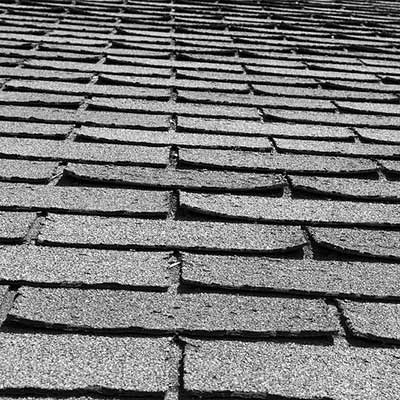
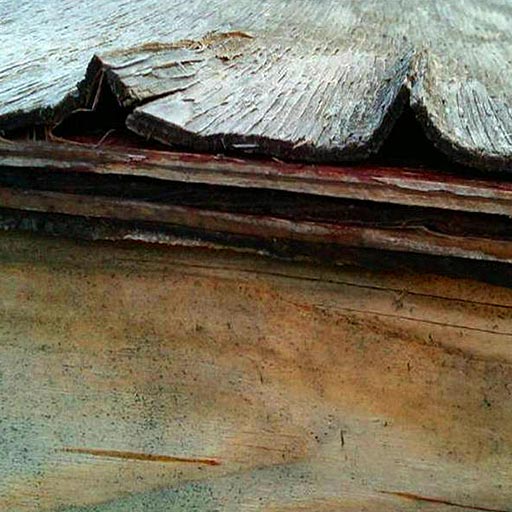
If needed, we'll send a certified expert to your home to measure and inspect your roof and attic to determine how much intake and exhaust ventilation is needed.
Proper airflow requires care and planning.
To move moist, humid air out of the attic, the entire interior of the attic must have continuous airflow. Without the right mix of ventilation points the air in the center of the attic will often remain static. Usually, the result is a dangerous buildup of moisture.
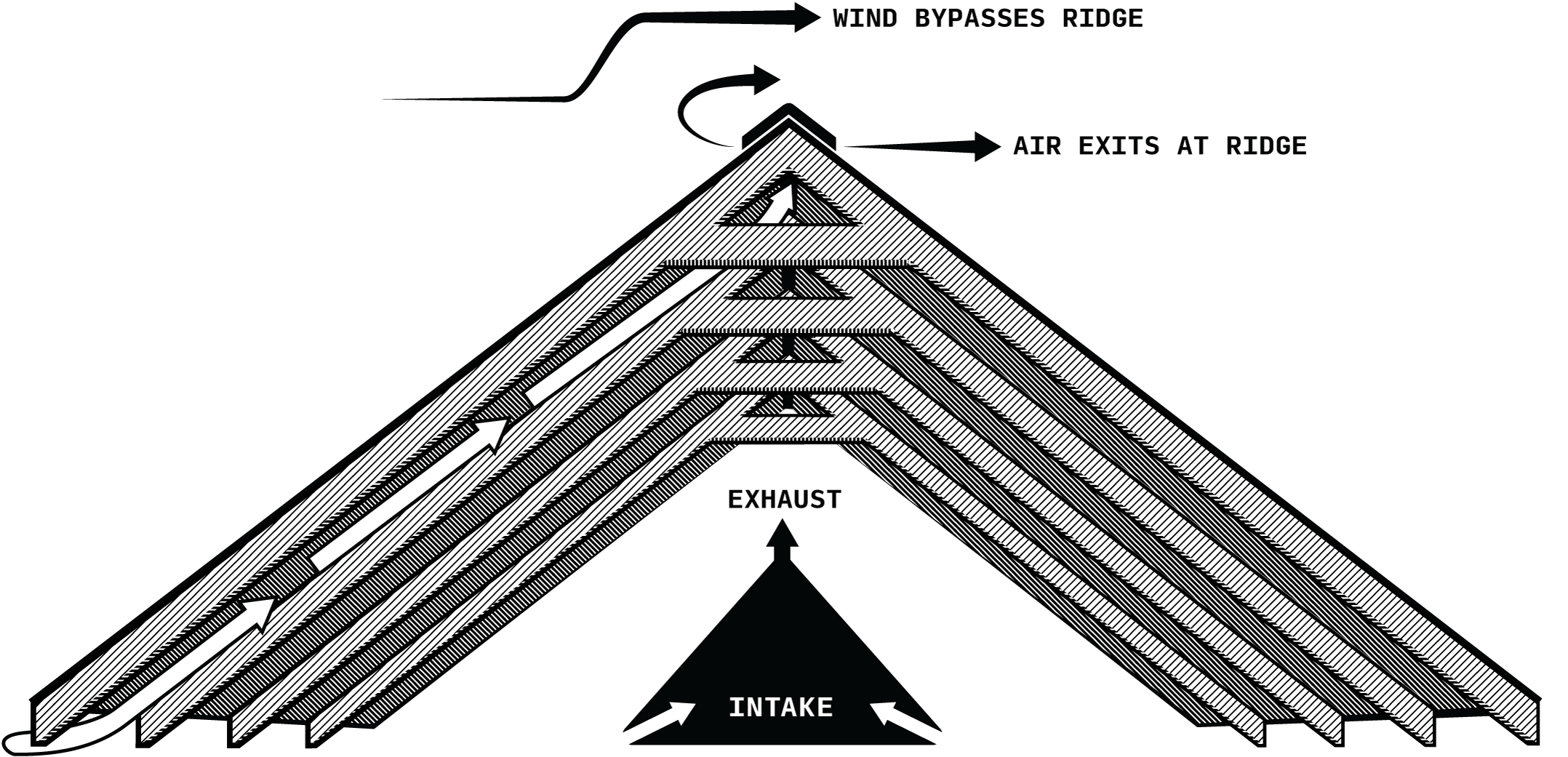
The stack effect is key.
To move air throughout the attic, it's necessary to achieve a "stack" effect, in which airflow across the roof draws air up through soffit or edge vents. The air is pulled through the attic, and then flows of out the ridge vents or can vents. A balanced amount of intake and exhaust are required, as well as correct placement and proper installation of ventilation solutions.
Poor ventilation can cause moisture to build up—fast.
Bathing, cooking, doing laundry, and cleaning produce water vapor. Add the vapor produced by human, animal, and plant respiration, and a normal household puts up to 300 liters of water into the air each month. Proper attic ventilation is critical in preventing moisture buildup.
Roof valley protection
Roof valleys are among the major trouble spots for leaks and eventual water damage, but with proper installation of the right products, you don’t have to worry.
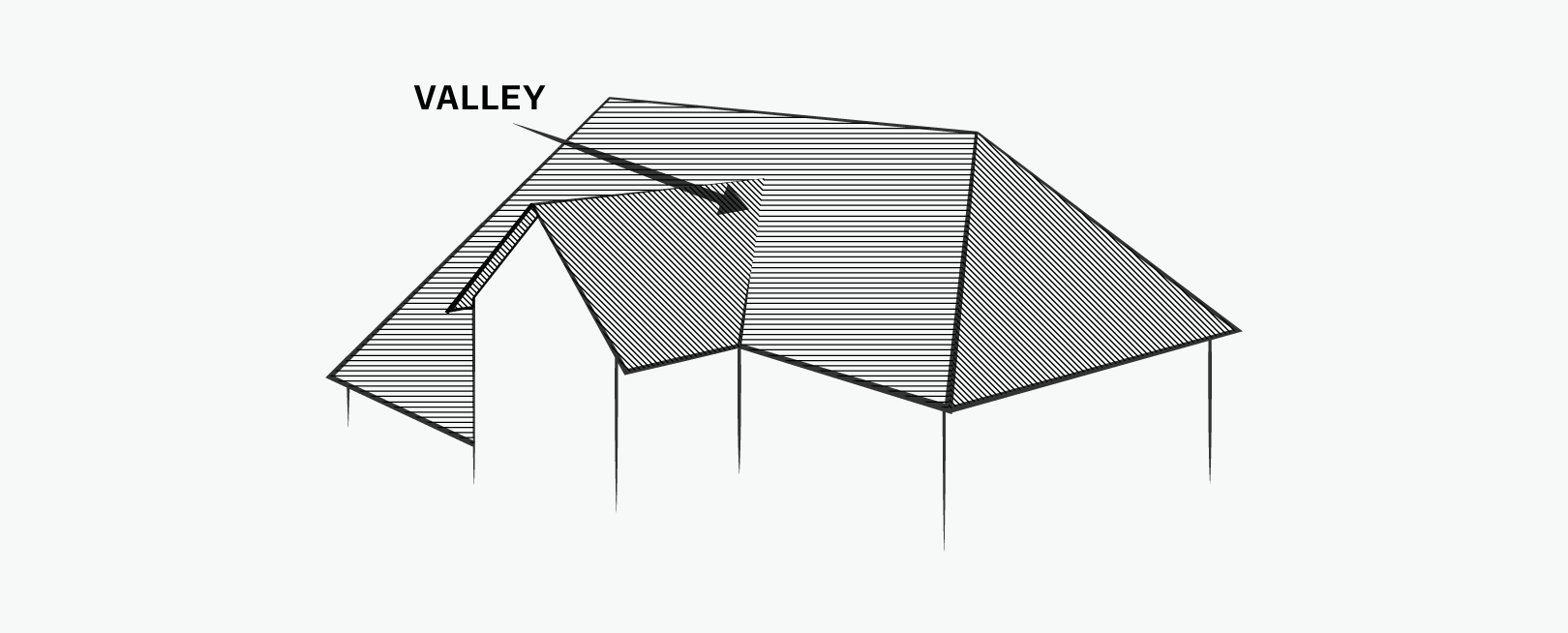
Because shingles cannot lay flat across a valley, and because valleys handle more water flow than flat parts of the roof, they wear out more quickly. The only way to keep the valleys safe from eventual rot and decay is to protect them with a rust-proof metal sheet that channels water to the eaves.
We protect your roof against ice damming.
Shingles and underlayments can't prevent leaks when water sits stagnant. During winter, water becomes trapped at the eaves, often causing considerable damage. In Michigan, ice damming damage is among the most common causes of major roofing problems. Even a single season of heavy ice buildup can ruin the wood at the eaves.
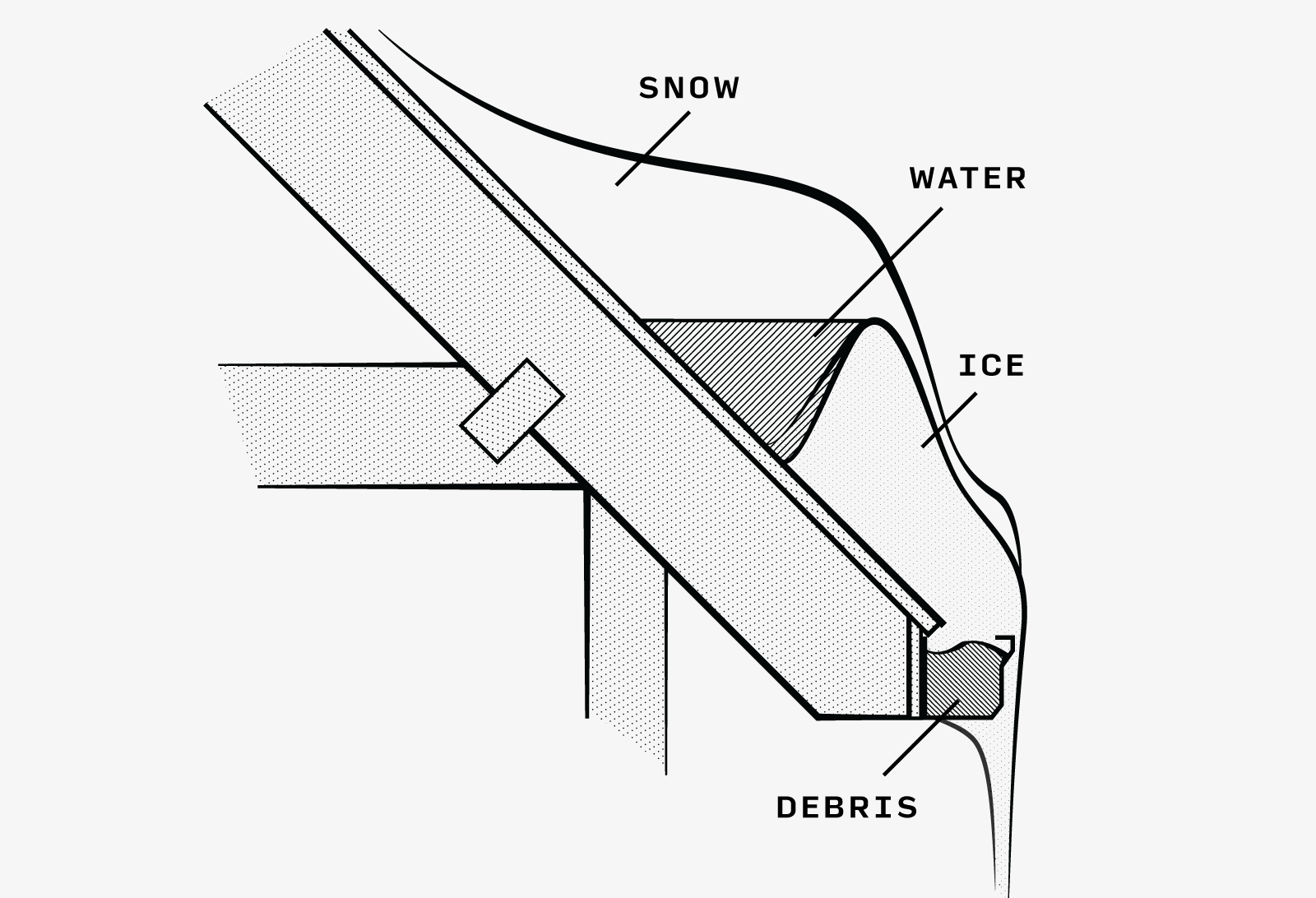
Ice and water shield is the best defense.
A water-tight layer of rubber membrane, that can keep standing water at bay is the only way to mitigate the danger posed by ice buildup.
Chimney Saddles & Flashing
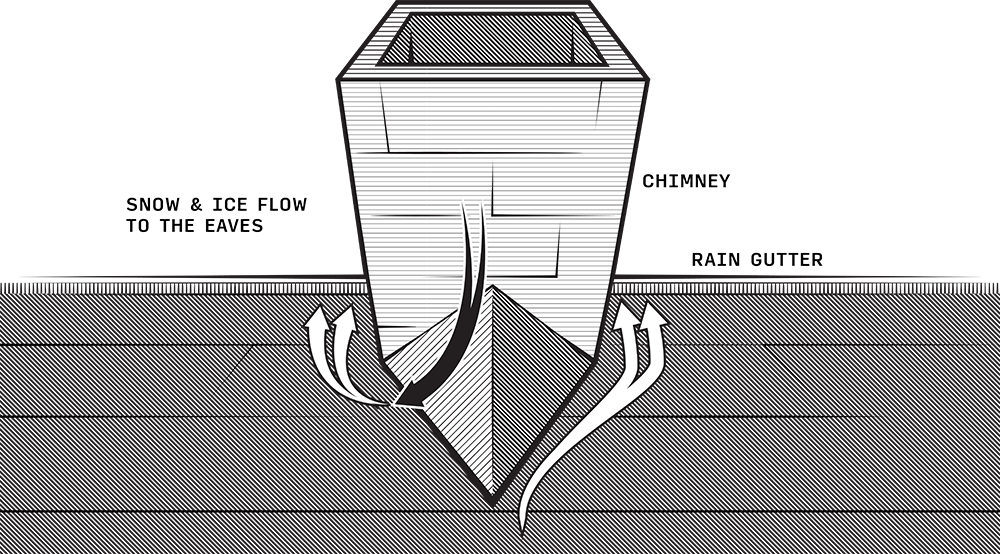
Saddles prevent ice buildup.
Without a saddle, many chimneys retain snow which turns to ice over time. When heat from inside the home melts the ice from below, water may sit stagnant on the roof, causing leaks and rot. If needed, we'll build a chimney saddle to both provide a runoff path for melting ice and limit snow buildup.
Sun-exposed sealants fail.
Even the toughest sealants will last only a short time when exposed to direct sunlight year-round, in combination with seasonal temperature extremes. To protect the sealant from sun exposure, we cut a groove into the mortar and tuck the edge of the flashing inside. This way, the flashing sealant lasts as long as the roof.